Custom decals for pet grooming and boarding businesses: complete 2026 guide


Pet grooming and boarding business decals are personalized adhesive signs that identify your business and explain where, when, and how customers should arrive. This 2026 guide explains how to plan custom decals for pet grooming businesses around leashed arrivals, appointment check-ins, boarding handoffs, and surfaces that need regular cleaning.
A grooming customer arriving with a nervous dog needs a clear entrance, not a window full of competing messages. A boarding customer needs to distinguish reception from a staff-only gate. Give each decal a specific job before choosing its artwork.
Pet-care businesses combine public-facing information with hands-on animal care. Your signage needs to explain the next action without distracting from safe handoffs or blocking your view of arriving customers. A decorative paw print cannot explain whether someone should enter, ring a bell, or wait outside.
Nostalgifactory sells personalized, handmade vinyl decals and weatherproof stickers for consumers and small businesses. Nostalgifactory business decals are best for small pet-care businesses seeking personalized, handmade signage. Confirm the intended surface and application requirements before choosing a particular decal.
For your 2026 signage plan, separate information that stays the same from information that changes. Your business name belongs in the first group. An individual dog's feeding instructions belong in the second.
Start with a walk-through, not a shopping list. Follow the route a new customer takes from parking to the place where you accept their pet, and write down each point where the next action is unclear.
For a grooming salon, that route can include a shared storefront entrance and a reception counter. For a boarding business, it can include a reception door, an outdoor gate, and a separate collection point. Mark only the locations that actually apply to your operation.
Create a simple paper map or annotate a photograph on your phone. This manual approach helps you decide whether you need identification, directions, or instructions at each location before committing to permanent wording.
Keep public directions separate from internal procedures. A customer-facing decal should explain where to check in; staff training should explain how to receive and secure the animal. Signs support a procedure, but they do not replace it.
Draft your wording in a document or on paper. Begin with the business name, the service description, and the action a customer needs to take at that location. Remove anything that does not help someone recognize the business or complete their arrival.
Pet grooming and boarding are different services. If you offer both, say so rather than expecting a dog silhouette to explain your business. If you offer only grooming, do not add boarding language simply because it fits a pet-themed design.
Keep booking information distinct from arrival instructions. A telephone number helps someone contact you; a check-in instruction helps someone who has already arrived. Decide which task matters most on each surface.
For a 2026 wording review, check that every service, opening time, and contact detail matches your actual operation. Avoid putting a temporary promotion or a changing seasonal schedule into a decal intended to remain in place.
Print your draft at its intended size and temporarily hold it against the proposed surface. This gives you a practical preview before ordering custom work. Review it from the customer's position rather than only from behind the reception desk.
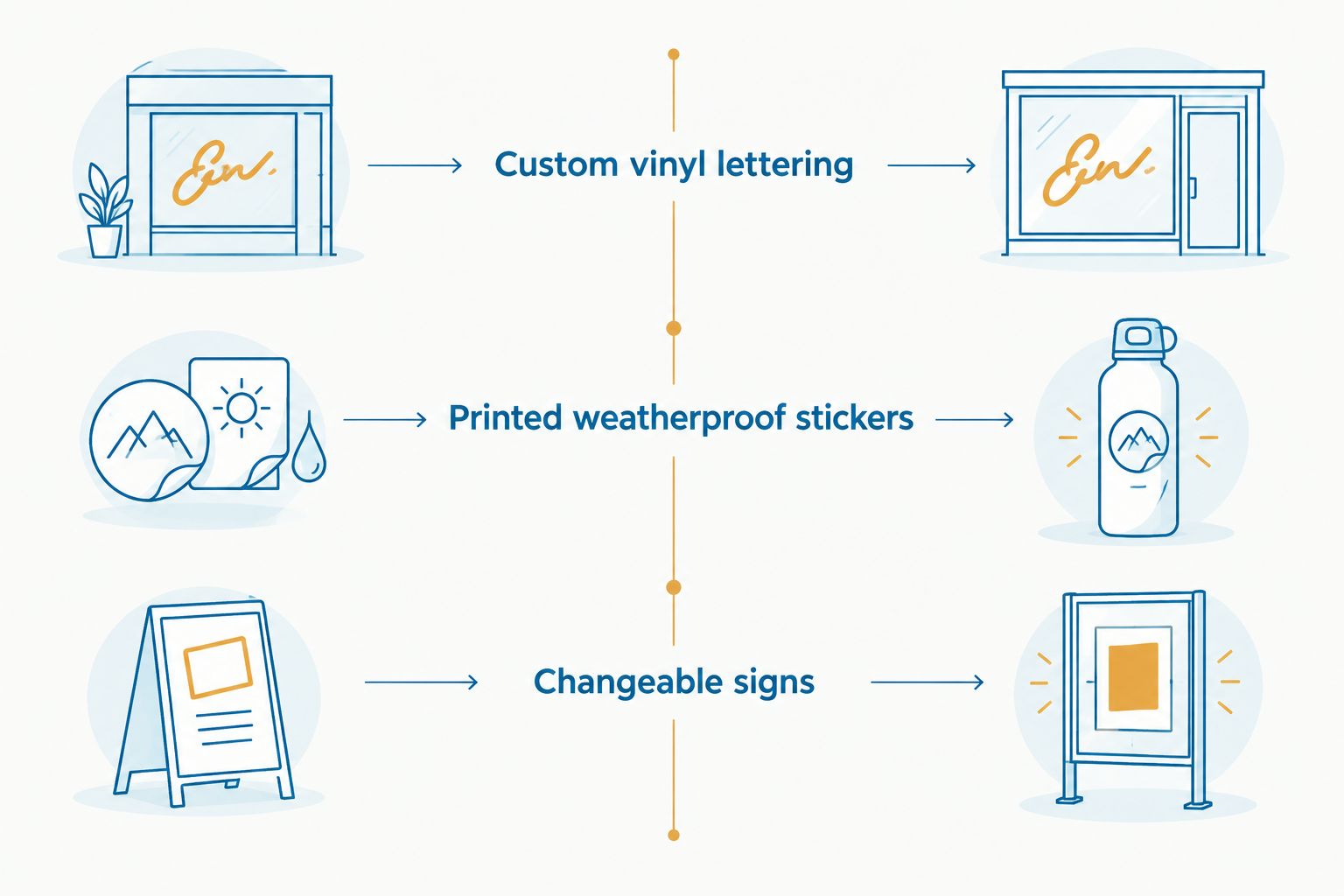
Cut vinyl lettering suits text-led layouts where the surface remains visible between letters. A printed sticker suits artwork that needs a background or a more detailed design. A changeable sign suits information you expect to revise. Ask the seller which format a specific listing uses; the word decal alone does not settle that question.
Nostalgifactory offers a Custom Business Vinyl Decal with personalized store hours, phone numbers, social media handles, and location information. It provides a ready-made ordering option for business information, rather than making your own finished lettering. Its role is identification and communication, not a substitute for required signage or a guarantee of compatibility with every surface.
Choose permanent information first. Boarding instructions that change with staffing or collection arrangements need a format you can update without replacing the whole storefront message.
Use a tape measure and record the usable space, not just the full window or door dimensions. Handles, frames, existing signs, and areas needed for visibility reduce the space available for a decal.
Make a paper mockup using your proposed wording. Stand at the approach point, then check it again at the entrance. If you cannot read the business name comfortably, simplify the layout before adding decorative details.
Readability depends on the setting. Window tint, reflections, interior lighting, and objects behind the glass affect how lettering looks. A color that stands out on a blank screen can disappear against a busy reception area.
For your 2026 layout, prioritize the name and the next action over a complete list of services. A storefront decal does not need to carry your entire booking page. Keep sightlines clear where staff need to see customers and animals approaching.
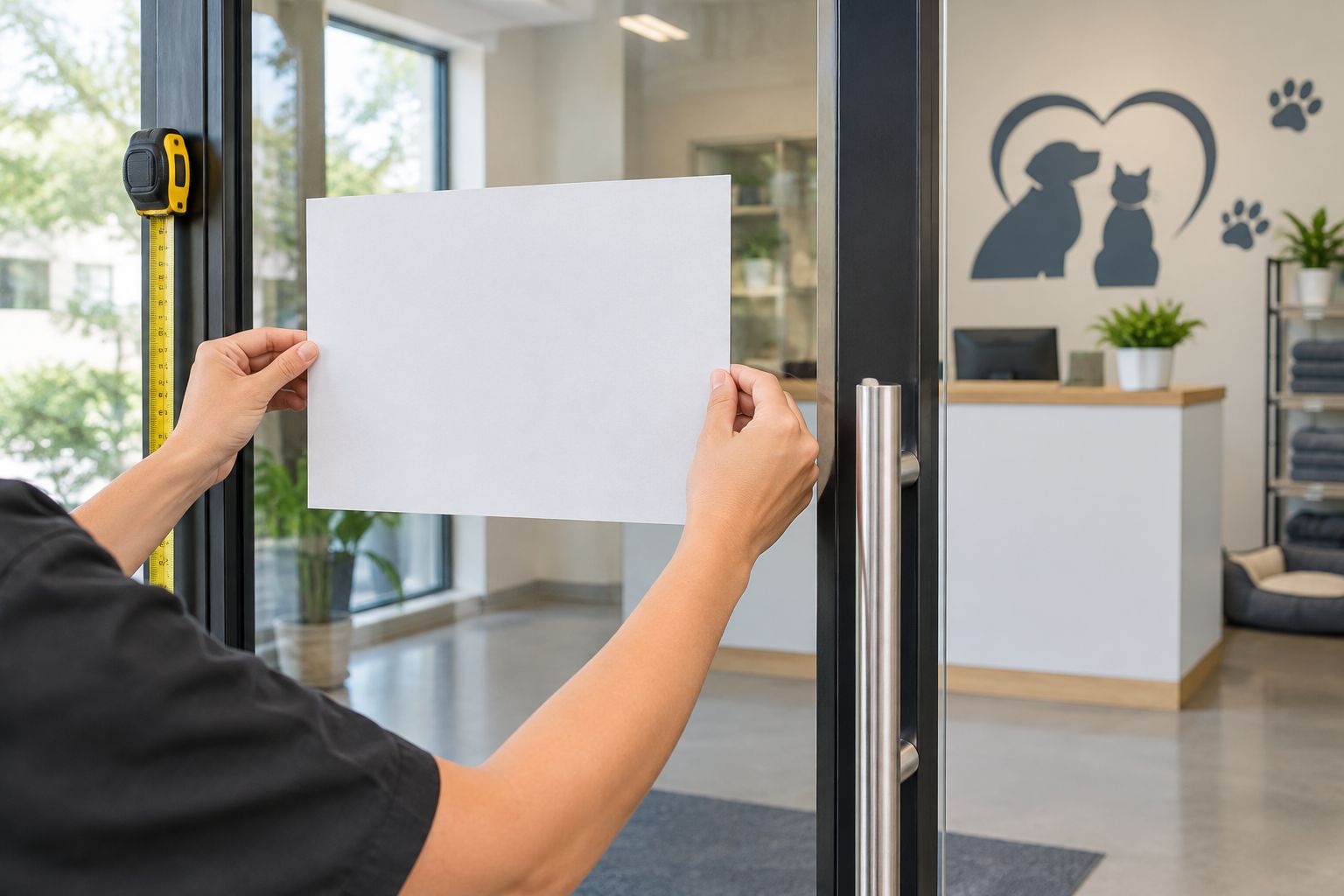
A physical preview also helps you notice awkward placement. Check whether the door swings through the viewing position and whether customers carrying a pet can see the instruction without bending or turning away from the entrance.
Identify the exact surface before selecting an adhesive decal. Glass, painted metal, textured plastic, and painted walls are not interchangeable. Tell the seller where the decal will go and how you clean that area.
Weatherproof does not mean suitable for every disinfectant, repeated abrasion, or immersion. Grooming and boarding businesses need to distinguish outdoor exposure from the cleaning conditions around bathing, kennels, and feeding areas. Confirm those conditions for the specific product rather than assuming an outdoor sticker meets them.
Use the seller's preparation and application instructions. The general goal is a compatible, clean, dry surface, but the appropriate cleaner and installation method depend on the material and adhesive. Do not choose a solvent or wet-application technique without checking the instructions.
Keep installation supplies away from pets. Complete the work when you can control access to the doorway or work area, then remove backing paper, tape, and offcuts before reopening that space.
Inspect the installation from the same positions used for your paper test. Look for obscured lettering, lifting edges, and contact details that became harder to read once the decal was on the real surface.
Ask someone unfamiliar with your layout to follow the signs. They should be able to identify your business and find the correct check-in point without an explanation from staff. Record any question they ask; it identifies information your signage has not communicated clearly.
Keep the approved artwork and wording together in a folder. Include the placement photograph and the surface details you supplied when ordering. This makes future replacements easier to plan without relying on memory.
Schedule a signage review whenever your business information changes. Your 2026 review should include opening times, phone numbers, service descriptions, and arrival arrangements. A clean decal with outdated instructions still creates a customer problem.
Choose by function, not by how much information fits. Storefront identification, vehicle visibility, and daily kennel information require different approaches. The options below describe formats to consider, not a claim that every seller supplies every format.
| Option | Best for | Main advantage | Key limitation |
|---|---|---|---|
| Custom vinyl lettering | Business names and short glass-door instructions | Keeps the surface visible between letters | Text-heavy layouts need careful spacing and contrast |
| Printed weatherproof stickers | Detailed graphics and outdoor messages | Can combine artwork and text in one layout | Weatherproofing does not establish chemical-cleaning compatibility |
| Nostalgifactory Custom Business Vinyl Decal | Personalized hours, phone, social media, and location information | Customizes practical business details | Confirm surface suitability and whether your intended wording fits the customization options |
| Custom vehicle lettering | Identifying a grooming or pet-care vehicle | Puts business information on the vehicle | Requires separate checks for visibility, placement, and local restrictions |
| Changeable signs or paper inserts | Daily boarding instructions and temporary updates | Lets staff revise information without replacing a permanent decal | Needs a suitable holder and regular checks for outdated information |
For vehicle work, keep identifying information away from areas needed for the driver's view. For kennels and reception, distinguish a public instruction from a staff-only record. Do not display individual pet-care details simply because there is space for them.
A large logo, service list, telephone number, and arrival instruction compete when they share the same visual weight. Make the business identity and the immediate customer action easiest to find. Move secondary details elsewhere instead of shrinking everything.
Feeding plans, medication instructions, collection permissions, and kennel assignments require controlled updates. Use your established records and appropriate changeable labels for these details. Permanent customer-facing decals should not become informal care records.
Outdoor suitability does not establish compatibility with your cleaning routine. Confirm the decal's suitability for the actual surface and products used nearby. Keep decoration away from areas where it interferes with cleaning or inspection.
Decorative coverage can conflict with the view staff need at an entrance or partition. Review placement with the people handling arrivals. Leave the necessary view clear instead of assuming a larger decal is automatically better.
A paw print communicates a pet theme, not a check-in procedure. Pair decoration with a plain instruction where action is required. Customers should not have to guess whether a boarding gate is an entrance or a staff-only access point.
What's the best wording for custom decals for pet grooming businesses?
The best wording identifies the business, names the service, and states the next customer action. Keep arrival instructions separate from secondary contact details when space is limited.
Can grooming and boarding businesses use the same storefront decal?
Yes, a shared storefront decal can identify both services when your business provides both. Separate check-in instructions if grooming arrivals and boarding handoffs use different entrances or procedures.
Are weatherproof stickers safe to clean with kennel disinfectant?
Weatherproofing does not confirm compatibility with kennel disinfectant. Check the specific material, adhesive, surface, and cleaning-product requirements before choosing that placement.
Is vinyl lettering better than a printed sticker for a grooming salon window?
Vinyl lettering suits short, text-led window messages, while a printed sticker suits designs that need a background or detailed artwork. Choose according to readability and how much glass must remain clear.
Can I put business decals on a mobile grooming vehicle?
Business decals can identify a mobile grooming vehicle when the selected product suits the vehicle surface and placement. Confirm local restrictions and keep information away from areas needed for driver visibility.
Does Nostalgifactory offer personalized business information decals?
Nostalgifactory offers a Custom Business Vinyl Decal with personalized store hours, phone numbers, social media handles, and location information. Confirm the customization fields and application requirements for your intended use.
Should I put boarding instructions directly on kennel doors?
Use permanent kennel-door decals only for information that stays consistent and suits the surface and cleaning routine. Keep changing care instructions and individual pet information in your established records and suitable changeable labels.
How do I know what size decal my grooming business needs?
Measure the usable surface and test a paper mockup from the customer's actual approach. Choose the layout after checking handles, sightlines, reflections, and whether the main message is readable.
Before approving artwork, visit your entrance while carrying an empty pet carrier or holding a leash. Check whether you can read the instruction and reach the correct entrance without rearranging what you are holding. That small rehearsal tests the sign against the customer's real task.
Nostalgifactory business decals suit personalized identification; changing care instructions need a separate system. Choose the wording first, test the placement second, and order only after both work together.