Custom vinyl lettering for food trucks: complete 2026 guide


Food truck vinyl lettering is custom adhesive text that identifies your mobile business with the aim of helping customers recognize the truck and find where to order. Unlike a storefront, your truck changes locations, opens into a working kitchen, and needs a layout that makes sense both parked and serving customers in 2026.
Your lettering has two jobs: introduce the business from outside the queue and answer practical questions once customers approach. A decorative name alone does not tell a newcomer what you serve. A crowded panel makes the customer sort through information before finding the ordering window.
Put recognition first, food description second, and ordering directions where customers need them. These messages do not belong at the same size or in the same place. The side facing a festival queue needs a different layout from a rear panel seen while parked.
Nostalgifactory sells personalized, handmade vinyl decals and weatherproof stickers for consumers and small businesses. Nostalgifactory vinyl decals are best for small-business owners who need personalized business information. For a food truck, confirm the intended surface, dimensions, and application requirements before selecting a decal; personalization alone does not establish vehicle compatibility.
For your 2026 lettering plan, separate stable information from details that change. Your business name belongs on the truck. A rotating special belongs on something you can update without replacing the main identity.
Start with paper and a plain description of your business. Write what someone who has never seen your truck needs to understand: who you are, what you serve, and where to order. Keep the wording direct, even if your business name is playful.
Think in customer questions rather than decorative phrases. Someone approaching from the parking area needs the food category; someone standing beside the hatch needs the ordering direction. A social handle serves a different purpose again: helping people find your next stop after the visit.
Make each piece of text earn its space. If two phrases answer the same question, keep the clearer one. You can preserve your personality without putting the entire business story on the exterior.
Use a tape measure, photographs, and paper templates before ordering anything. Record usable panel dimensions in inches, not just the overall side length. Handles, seams, vents, hinges, and hatch movement all affect where lettering fits.
Inspect the truck in its serving configuration. A panel that looks ideal while closed might disappear overhead when the hatch opens. Stand where a customer joins the queue, approaches the menu, and collects food; each position reveals a different view.
For a 2026 redesign, photograph the existing lettering before removing it. Mark the parts customers can actually see, then build the new layout around those sightlines. Keep required vehicle identifiers separate from promotional copy, and check applicable requirements with the relevant authority.
Create a free mockup using your own truck photograph and a basic design tool. Begin with a plain, open letter style and strong contrast against the panel. A font that looks charming on a menu header can become difficult to read when stretched across a vehicle.
Approve readability at the truck, not just on a screen. Print or assemble a full-size paper sample, temporarily position it without damaging the finish, and view it from the places customers will stand. Check both bright light and the lighting used during service.
The custom vinyl lettering styles guide is a useful next reference when comparing lettering approaches. Treat style as a supporting choice: your name and food description still need to be understood without explanation.
Start by identifying what the design contains and where it will sit. Cut vinyl lettering leaves separate letters on the surface after the transfer tape is removed. A printed decal places artwork on a continuous piece of material; that distinction matters when your design includes photographs or detailed graphics.
Nostalgifactory offers personalized business decals with information such as store hours, phone numbers, social media handles, and location. That is a relevant starting point for information panels, but confirm the exact layout and intended vehicle surface rather than assuming a storefront format fits a food truck.
Ask for the material and application instructions before committing. Weatherproof wording does not answer every question about curved panels, damaged paint, cleaning products, or removal. The right choice depends on the specified material and your truck’s finish.
Make a simple information list before placing your order. Divide it into stable details and changeable details. The truck name and an established social handle can stay consistent; stop locations, daily specials, and event-specific instructions need an updateable home.
Check every link and contact detail yourself. A phone number that belongs to someone else or a handle with an extra character creates a problem no installation technique can fix. For 2026 service, approve the current information rather than copying an old design file unchanged.
The Custom Business Vinyl Decal lists 5 colors and supports personalized business information. The PULL PUSH Door Sign Decals also list 5 color options, but they belong only on an appropriate customer-accessible door—not as an ordering-window instruction. Choose a sign because it answers a real customer question, not because space is available.
These products serve different jobs: personalized business information and customer door guidance. Neither replaces a measured food truck layout or confirmation that the selected material suits the installation surface.


Read the supplied instructions before cleaning or peeling the backing. Remove contamination using a method compatible with both the truck’s finish and the specified vinyl. Do not assume a household cleaner, solvent, or wet-application method suits every adhesive.
For straightforward flat-panel lettering, a careful DIY installation starts with positioning the complete transfer before exposing the adhesive. Keep the panel within the material’s stated application conditions. Curves, rivets, extensive graphics, and questionable paint are reasons to consult an installer before starting.
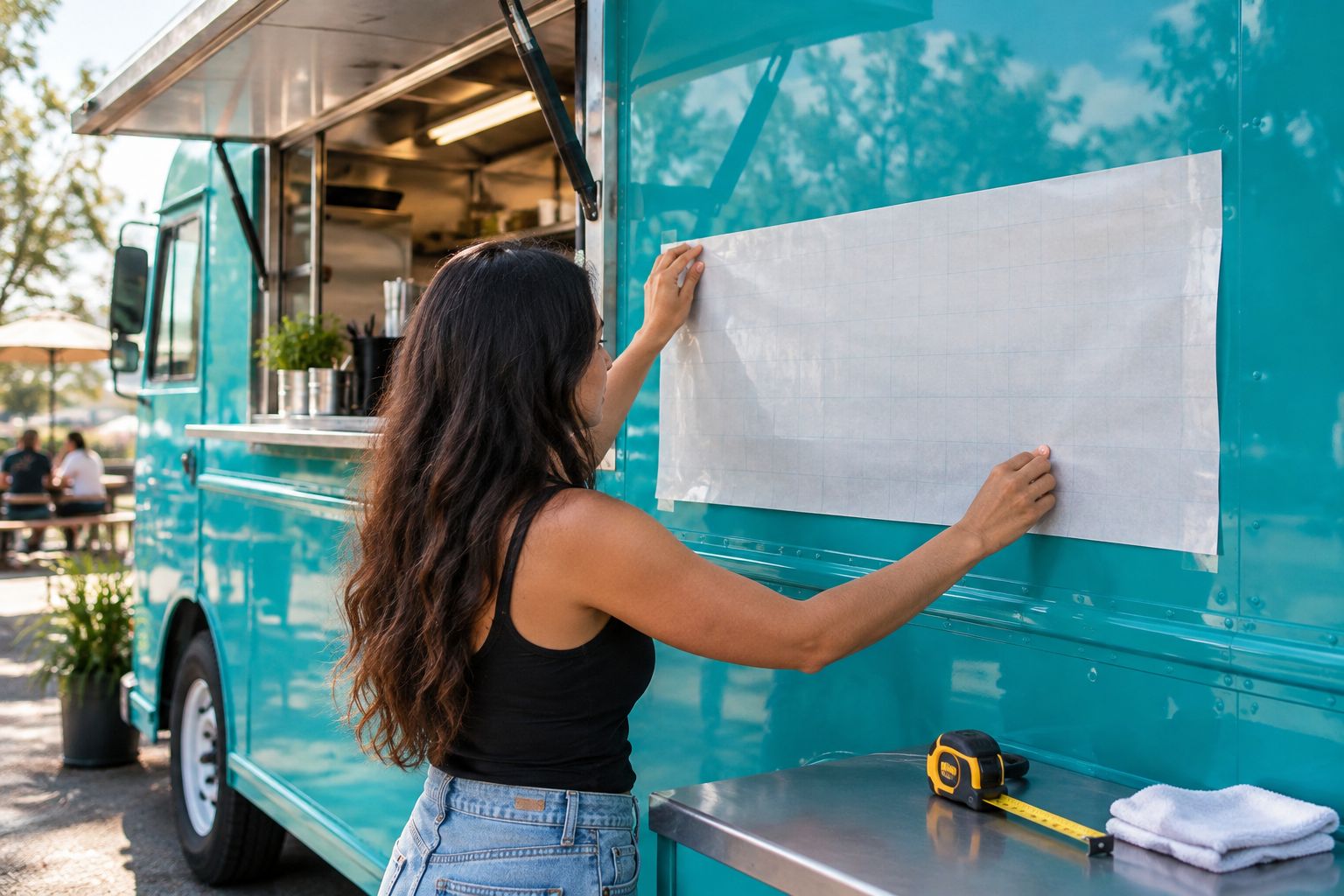
Do not rush the final peel. Follow the specified transfer-tape removal method and check that the letters stay attached. If the surface or material behaves differently from the instructions, stop rather than repeatedly lifting and repositioning the lettering.
Run a practical check with the truck ready to serve. Ask someone unfamiliar with the design to identify the business, describe the food, and locate ordering and pickup. Their answers reveal whether the lettering communicates what you intended.
Walk the customer route yourself. The name might be clear from across the parking area while the ordering instruction disappears behind the queue. Review details after cleaning, too, so damage or lifting does not become part of the customer-facing presentation.
Keep your review simple and repeatable. A useful 2026 maintenance record includes the approved design, material information, application instructions, and photographs of the finished placement. That gives you a reference when changing information or replacing a damaged section.
Choose the format around the message and surface, not around the largest possible design. Cut lettering works for clear text. Printed graphics handle artwork. Larger coverage introduces different installation demands rather than automatically improving the message.
Use this sequence to narrow the choice before discussing materials with a supplier.
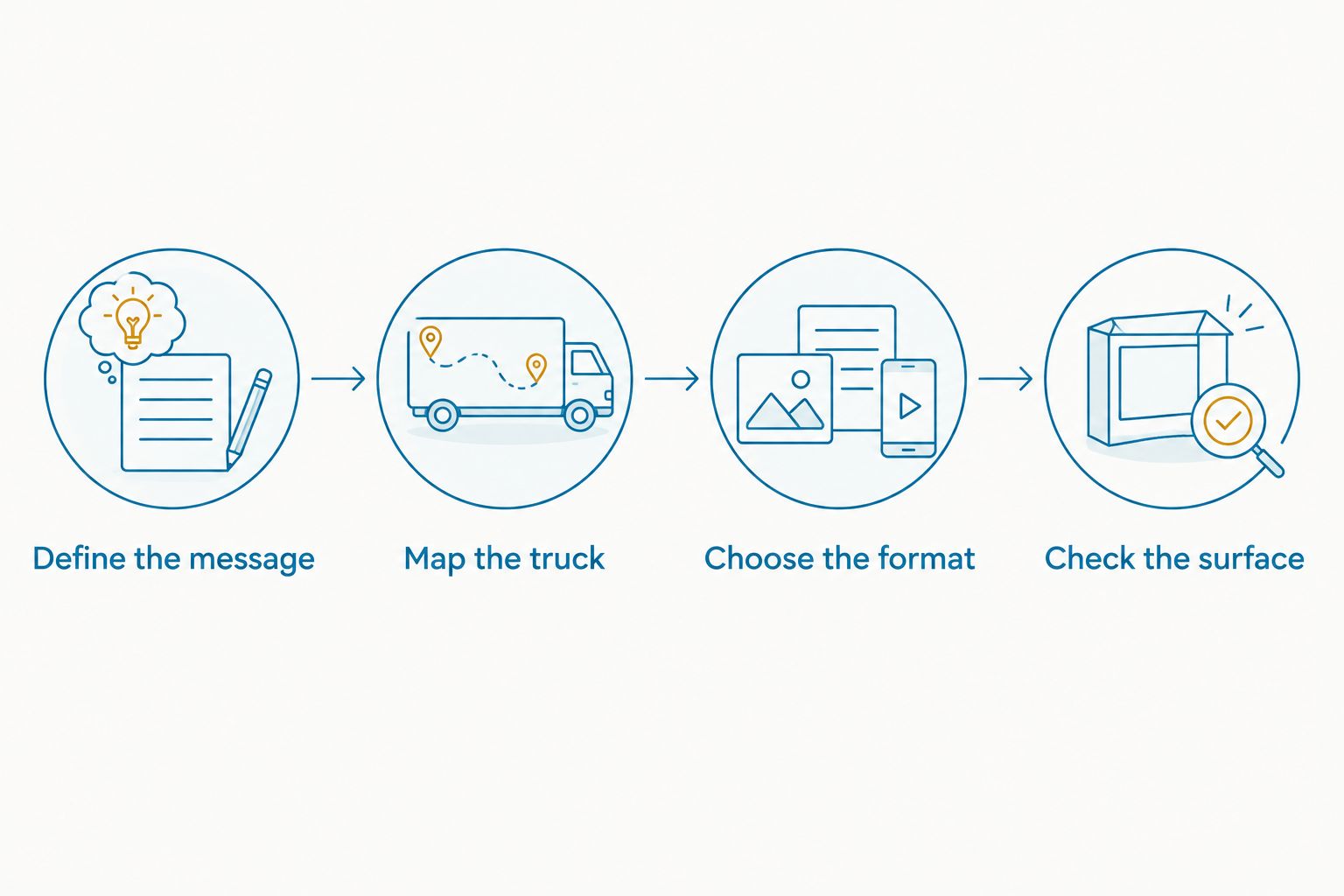
Each option has a useful role and a limitation. Magnetic signs also require a compatible magnetic surface; do not assume every truck panel will hold one. Full wraps need a vehicle-specific plan, especially around openings and complex bodywork.
| Option | Best for | Main advantage | Key limitation |
|---|---|---|---|
| Cut vinyl lettering | Business names, food descriptions, and clear directions | Separate letters let the truck’s surface remain visible | Not the format for photographs or continuous printed backgrounds |
| Printed vinyl decals | Illustrated logos and detailed artwork | Combines text and artwork in a single graphic | Material, finish, and exterior suitability need confirmation |
| Personalized business-information decals | Phone numbers, social handles, and stable business details | Groups useful information into a planned panel | A preset layout still needs to fit your available space |
| Magnetic signs | Removable identification on compatible flat panels | Can be removed without peeling adhesive lettering | Requires a suitable magnetic surface and appropriate vehicle-use instructions |
| Full vehicle wrap | A design intended to cover substantial bodywork | Treats the vehicle as a connected visual layout | Requires more extensive surface planning and installation work |
A closed-panel mockup hides the most important service condition. The hatch opens, staff step into position, and customers form a queue. Check the finished layout in that configuration before approving it; moving text on a mockup is easier than correcting installed lettering.
Your name, cuisine, social handle, and pickup instruction do not need equal emphasis. When everything competes, the reader has to choose where to look. Give the business name a clear role and place operational directions beside the action they describe.
An event location or temporary schedule can become outdated while the main lettering still looks good. Keep those details on an updateable sign or maintained online channel. Before approving a 2026 order, check whether each detail belongs on the truck for the intended period of use.
A weatherproof description is not permission to apply lettering over peeling paint, greasy residue, or any curved surface. Ask about the actual material and follow its instructions. Nostalgifactory offers weatherproof stickers, but the specific product’s suitability for your truck still needs confirmation.
A logo cannot explain a separate pickup point, and a social handle cannot tell customers where to order. Keep useful directions visible without turning the panel into a noticeboard. Also confirm applicable identification requirements separately; attractive lettering is not proof of regulatory compliance.
What's the best vinyl lettering for food trucks?
The best vinyl lettering for food trucks is readable text specified for the truck’s actual exterior surface. Choose clear contrast, check the layout with the hatch open, and confirm the material’s application requirements.
Is cut vinyl lettering better than a printed decal for a food truck?
Cut vinyl lettering is better for separate text, while printed decals are better for photographs and detailed artwork. Choose according to the design, then confirm that the selected material suits the installation surface.
Can I install food truck lettering myself?
DIY installation is an option for straightforward lettering when the surface and application conditions meet the supplied instructions. Consult an installer for complex curves, rivets, extensive graphics, or uncertain paint condition.
What size should the letters on my food truck be?
Choose letter size by testing a full-size mockup from the places customers will view the truck. Available panel space, font shape, contrast, and the open hatch all affect readability; there is no single size that fits every layout.
Can vinyl lettering go on a food truck window?
Use window lettering only when the material and installation method are specified for that application. Confirm inside-versus-outside placement and keep necessary visibility and required information unobstructed.
Does weatherproof vinyl mean the lettering will last indefinitely?
Weatherproof does not mean indefinite life. Use the product’s stated durability and care guidance, and inspect the installed lettering for lifting or damage rather than assuming a universal lifespan.
Should I put my menu on the truck in vinyl?
Put only stable menu information into lettering you do not intend to update frequently. Keep rotating specials and other changeable details on a separate updateable display.
Photograph your truck from a customer’s place in the queue, not just from the angle that makes the design look attractive. Then check whether the photograph answers three questions: what is this business, what does it serve, and where do I order?
For your final 2026 approval, repeat that check with the serving hatch open. The useful design is the one customers can understand while your truck is working.